
What are you looking for?
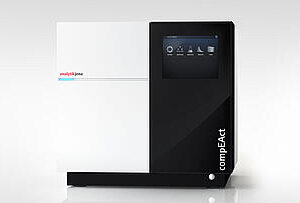
The multi EA 4000 is the ideal partner for your solids analysis, offering safe automation, enhanced analysis precision and reliability thanks to patented innovative solutions. The system has been created to cope with the most diverse sample matrices, while keeping operating costs and maintenance low.


The All-Rounder in Solids Analysis
The multi EA 4000 guarantees the fully automated determination of TS, TC, TX contents and the environmentally relevant parameters TOC, TIC, EC, and BOC in soil, sediments, waste, minerals, and other organic and inorganic solids. Its modular design concept allows to expand the application range from an one element analyzer to a fully automated multi-element analysis system at any time. Convenient, flexible, and customized to meet your needs
- Wide-range NDIR detector for carbon and sulfur with a dynamic measuring range from ppm to weight percent
- HTC technology for catalyst-free high-temperature decomposition of even the most difficult matrices
- Robust, highly resistant ceramic combustion tubes – especially well-suited to analyze aggressive samples with less wear and low operating costs
- Durable heating elements ensure maximum operating time
- Simultaneous carbon and sulfur analysis, independent of the element contents
- Fully automated determination of TOC and TIC from a single sample in only one analysis step
- Easy chlorine determination up to the weight percent range
- Unique combination of elements: carbon, sulfur, and chlorine – especially interesting for waste analyses
- Flame sensor technology for matrix-optimized sample decomposition in chlorine analysis
- Self Check System for optimal operating safety
- Intuitive software navigation for easy operation and perfect measurement results
- Easy to use – preset methods for various applications greatly simplify work and save valuable measuring time
Brochures
| Title | Language | Info |
|---|---|---|
| Broschüre multi EA 4000 (DE) | de | PDF, 407 KB |
| Brochure multi EA 4000 (EN) | en | PDF, 408 KB |
| Produktkatalog Chemische Analyse (DE) | de | PDF, 909 KB |
| Product Guide Chemical Analysis (EN) | en | PDF, 886 KB |
| Flyer Solid Waste Analysis – Halogen Determination in Waste and Recycling (EN) | en | PDF, 1 MB |
| Flyer Solid Waste Analysis – Halogen Determination in Waste and Recycling (EN) | en | PDF, 981 KB |
| Analyse des déchets solides – Détermination des halogènes (FR) | fr | PDF, 1 MB |
| Flyer Analyse des déchets solides – Solutions pour la mesure du COD et du COT (FR) | fr | PDF, 2 MB |
| Analysis of Building Materials: C/S/Cl and Metals Determination in Cement and Related Materials (EN) | en | PDF, 290 KB |
| Flyer Chemical Recycling of Plastics: Analytical Solutions for Crucial Quality Gates (EN) | en | PDF, 301 KB |
The All-Rounder in Solids Analysis
The multi EA 4000 guarantees the fully automated determination of TS, TC, TX contents and the environmentally relevant parameters TOC, TIC, EC, and BOC in soil, sediments, waste, minerals, and other organic and inorganic solids. Its modular design concept allows to expand the application range from an one element analyzer to a fully automated multi-element analysis system at any time. Convenient, flexible, and customized to meet your needs
- Wide-range NDIR detector for carbon and sulfur with a dynamic measuring range from ppm to weight percent
- HTC technology for catalyst-free high-temperature decomposition of even the most difficult matrices
- Robust, highly resistant ceramic combustion tubes – especially well-suited to analyze aggressive samples with less wear and low operating costs
- Durable heating elements ensure maximum operating time
- Simultaneous carbon and sulfur analysis, independent of the element contents
- Fully automated determination of TOC and TIC from a single sample in only one analysis step
- Easy chlorine determination up to the weight percent range
- Unique combination of elements: carbon, sulfur, and chlorine – especially interesting for waste analyses
- Flame sensor technology for matrix-optimized sample decomposition in chlorine analysis
- Self Check System for optimal operating safety
- Intuitive software navigation for easy operation and perfect measurement results
- Easy to use – preset methods for various applications greatly simplify work and save valuable measuring time
Brochures
| Title | Language | Info |
|---|---|---|
| Broschüre multi EA 4000 (DE) | de | PDF, 407 KB |
| Brochure multi EA 4000 (EN) | en | PDF, 408 KB |
| Produktkatalog Chemische Analyse (DE) | de | PDF, 909 KB |
| Product Guide Chemical Analysis (EN) | en | PDF, 886 KB |
| Flyer Solid Waste Analysis – Halogen Determination in Waste and Recycling (EN) | en | PDF, 1 MB |
| Flyer Solid Waste Analysis – Halogen Determination in Waste and Recycling (EN) | en | PDF, 981 KB |
| Analyse des déchets solides – Détermination des halogènes (FR) | fr | PDF, 1 MB |
| Flyer Analyse des déchets solides – Solutions pour la mesure du COD et du COT (FR) | fr | PDF, 2 MB |
| Analysis of Building Materials: C/S/Cl and Metals Determination in Cement and Related Materials (EN) | en | PDF, 290 KB |
| Flyer Chemical Recycling of Plastics: Analytical Solutions for Crucial Quality Gates (EN) | en | PDF, 301 KB |
The All-Rounder in Solids Analysis
The multi EA 4000 guarantees the fully automated determination of TS, TC, TX contents and the environmentally relevant parameters TOC, TIC, EC, and BOC in soil, sediments, waste, minerals, and other organic and inorganic solids. Its modular design concept allows to expand the application range from an one element analyzer to a fully automated multi-element analysis system at any time. Convenient, flexible, and customized to meet your needs
- Wide-range NDIR detector for carbon and sulfur with a dynamic measuring range from ppm to weight percent
- HTC technology for catalyst-free high-temperature decomposition of even the most difficult matrices
- Robust, highly resistant ceramic combustion tubes – especially well-suited to analyze aggressive samples with less wear and low operating costs
- Durable heating elements ensure maximum operating time
- Simultaneous carbon and sulfur analysis, independent of the element contents
- Fully automated determination of TOC and TIC from a single sample in only one analysis step
- Easy chlorine determination up to the weight percent range
- Unique combination of elements: carbon, sulfur, and chlorine – especially interesting for waste analyses
- Flame sensor technology for matrix-optimized sample decomposition in chlorine analysis
- Self Check System for optimal operating safety
- Intuitive software navigation for easy operation and perfect measurement results
- Easy to use – preset methods for various applications greatly simplify work and save valuable measuring time
Brochures
| Title | Language | Info |
|---|---|---|
| Broschüre multi EA 4000 (DE) | de | PDF, 407 KB |
| Brochure multi EA 4000 (EN) | en | PDF, 408 KB |
| Produktkatalog Chemische Analyse (DE) | de | PDF, 909 KB |
| Product Guide Chemical Analysis (EN) | en | PDF, 886 KB |
| Flyer Solid Waste Analysis – Halogen Determination in Waste and Recycling (EN) | en | PDF, 1 MB |
| Flyer Solid Waste Analysis – Halogen Determination in Waste and Recycling (EN) | en | PDF, 981 KB |
| Analyse des déchets solides – Détermination des halogènes (FR) | fr | PDF, 1 MB |
| Flyer Analyse des déchets solides – Solutions pour la mesure du COD et du COT (FR) | fr | PDF, 2 MB |
| Analysis of Building Materials: C/S/Cl and Metals Determination in Cement and Related Materials (EN) | en | PDF, 290 KB |
| Flyer Chemical Recycling of Plastics: Analytical Solutions for Crucial Quality Gates (EN) | en | PDF, 301 KB |
The multi EA 4000 guarantees the fully automated determination of TS, TC, TX contents and the environmentally relevant parameters TOC, TIC, EC, and BOC in soil, sediments, waste, minerals, and other organic and inorganic solids. Its modular design concept allows to expand the application range from an one element analyzer to a fully automated multi-element analysis system at any time. Convenient, flexible, and customized to meet your needs

High Performance with Low Maintenance
The multi EA 4000 convinces with its durable design. The selected resistant materials are an advantage when analyzing aggressive and saline samples that cause a high degree of wear with traditional systems. A special optics arrangement and effective gas purification provide a resilient C/S detector that guarantees for extremely low maintenance and excellent long-term stability. Maintenance effort is reduced to a minimum while the operating time of the system is at maximum. Low operating costs and an absolutely reliable analyzing and measuring technique ensure each process step is as effective and efficient as possible.
- Use of robust and virtually wear-free ceramic combustion tubes instead of cost-intensive and quickly worn-out quartz combustion tubes
- Minimal chemical consumption thanks to high-temperature ceramic technology (HTC) – no catalysts needed
- No complex reduction and separation of the oxidation products (chromatographic via adsorption columns) required – due to the use of selective detectors for CO2, SO2 and HCl
- No auxiliary gas required for carbon and sulfur analysis
- High sample weights up to 3 g, no laborious sample homogenization required
Thanks to the variable gas flow management and the optimized wide range coulometer, chlorine analyses are possible from the low ppm up to the weight percent range. The coulometric detection system utilizes a unique patented combination electrode. The electrode is based on the latest ceramic technology and does not use internal electrolytes, membranes, or diaphragms. It is immediately ready for use and very low maintenance. The measuring cell is equipped with an automatic stirring function and a self-cleaning silver generator electrode. The integrated cooling of the coulometer cell minimizes electrolyte evaporation while in continuous operation and guarantees stable results. Compared with traditional electrolytes, the special electrolyte used has a significantly increased chloride absorption capacity. This results in long-term stability, which allows for uninterrupted routine analyses even with extremely high chloride loads and without bothersome electrolyte changes.
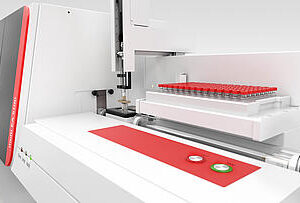
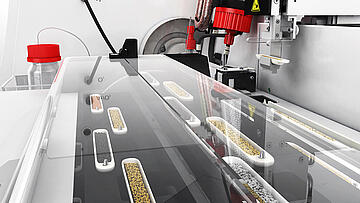
The challenge modern analytical systems for marco-elemental analysis face lies in reliable automation for an extensive range of samples. The multi EA 4000 offers the fully automatic determination of TOC based on the differential method. The FPG 48 solids sampler offers an enormous capacity for up to 48 sample boats to be transferred into the combustion furnace. Other accessories include modules for direct and automated determination of TIC and TOC. The multi EA 4000 with its high sample throughput is ideal for the automated analysis of carbon, sulfur, and chlorine, as well as the automated determination of total organic and inorganic carbon. By setting different waiting positions and feed speeds, samples of one and the same run each of them can be analyzed under optimal conditions. This means matrices requiring a special temperature program or gradient are processed easily and automatically together with others. An open gas lock replaces problematic sample ports that require opening and closing for sample introduction. It is completely maintenance-free, which avoids contamination and wear. A method library is included to ensure that the analysis of your sample is carried out optimally and reliably. The multi EA 4000 comes equipped with a Self Check System (SCS). The system automatically checks all relevant parameters such as flows and temperatures and guarantees trouble-free, fully automated operation with functions such as the automated gas shut-off and a low standby temperature at the end of an analysis sequence.
High Performance with Low Maintenance
The multi EA 4000 convinces with its durable design. The selected resistant materials are an advantage when analyzing aggressive and saline samples that cause a high degree of wear with traditional systems. A special optics arrangement and effective gas purification provide a resilient C/S detector that guarantees for extremely low maintenance and excellent long-term stability. Maintenance effort is reduced to a minimum while the operating time of the system is at maximum. Low operating costs and an absolutely reliable analyzing and measuring technique ensure each process step is as effective and efficient as possible.
- Use of robust and virtually wear-free ceramic combustion tubes instead of cost-intensive and quickly worn-out quartz combustion tubes
- Minimal chemical consumption thanks to high-temperature ceramic technology (HTC) – no catalysts needed
- No complex reduction and separation of the oxidation products (chromatographic via adsorption columns) required – due to the use of selective detectors for CO2, SO2 and HCl
- No auxiliary gas required for carbon and sulfur analysis
- High sample weights up to 3 g, no laborious sample homogenization required
Thanks to the variable gas flow management and the optimized wide range coulometer, chlorine analyses are possible from the low ppm up to the weight percent range. The coulometric detection system utilizes a unique patented combination electrode. The electrode is based on the latest ceramic technology and does not use internal electrolytes, membranes, or diaphragms. It is immediately ready for use and very low maintenance. The measuring cell is equipped with an automatic stirring function and a self-cleaning silver generator electrode. The integrated cooling of the coulometer cell minimizes electrolyte evaporation while in continuous operation and guarantees stable results. Compared with traditional electrolytes, the special electrolyte used has a significantly increased chloride absorption capacity. This results in long-term stability, which allows for uninterrupted routine analyses even with extremely high chloride loads and without bothersome electrolyte changes.
The challenge modern analytical systems for marco-elemental analysis face lies in reliable automation for an extensive range of samples. The multi EA 4000 offers the fully automatic determination of TOC based on the differential method. The FPG 48 solids sampler offers an enormous capacity for up to 48 sample boats to be transferred into the combustion furnace. Other accessories include modules for direct and automated determination of TIC and TOC. The multi EA 4000 with its high sample throughput is ideal for the automated analysis of carbon, sulfur, and chlorine, as well as the automated determination of total organic and inorganic carbon. By setting different waiting positions and feed speeds, samples of one and the same run each of them can be analyzed under optimal conditions. This means matrices requiring a special temperature program or gradient are processed easily and automatically together with others. An open gas lock replaces problematic sample ports that require opening and closing for sample introduction. It is completely maintenance-free, which avoids contamination and wear. A method library is included to ensure that the analysis of your sample is carried out optimally and reliably. The multi EA 4000 comes equipped with a Self Check System (SCS). The system automatically checks all relevant parameters such as flows and temperatures and guarantees trouble-free, fully automated operation with functions such as the automated gas shut-off and a low standby temperature at the end of an analysis sequence.
High Performance with Low Maintenance
The multi EA 4000 convinces with its durable design. The selected resistant materials are an advantage when analyzing aggressive and saline samples that cause a high degree of wear with traditional systems. A special optics arrangement and effective gas purification provide a resilient C/S detector that guarantees for extremely low maintenance and excellent long-term stability. Maintenance effort is reduced to a minimum while the operating time of the system is at maximum. Low operating costs and an absolutely reliable analyzing and measuring technique ensure each process step is as effective and efficient as possible.
- Use of robust and virtually wear-free ceramic combustion tubes instead of cost-intensive and quickly worn-out quartz combustion tubes
- Minimal chemical consumption thanks to high-temperature ceramic technology (HTC) – no catalysts needed
- No complex reduction and separation of the oxidation products (chromatographic via adsorption columns) required – due to the use of selective detectors for CO2, SO2 and HCl
- No auxiliary gas required for carbon and sulfur analysis
- High sample weights up to 3 g, no laborious sample homogenization required
Thanks to the variable gas flow management and the optimized wide range coulometer, chlorine analyses are possible from the low ppm up to the weight percent range. The coulometric detection system utilizes a unique patented combination electrode. The electrode is based on the latest ceramic technology and does not use internal electrolytes, membranes, or diaphragms. It is immediately ready for use and very low maintenance. The measuring cell is equipped with an automatic stirring function and a self-cleaning silver generator electrode. The integrated cooling of the coulometer cell minimizes electrolyte evaporation while in continuous operation and guarantees stable results. Compared with traditional electrolytes, the special electrolyte used has a significantly increased chloride absorption capacity. This results in long-term stability, which allows for uninterrupted routine analyses even with extremely high chloride loads and without bothersome electrolyte changes.
The challenge modern analytical systems for marco-elemental analysis face lies in reliable automation for an extensive range of samples. The multi EA 4000 offers the fully automatic determination of TOC based on the differential method. The FPG 48 solids sampler offers an enormous capacity for up to 48 sample boats to be transferred into the combustion furnace. Other accessories include modules for direct and automated determination of TIC and TOC. The multi EA 4000 with its high sample throughput is ideal for the automated analysis of carbon, sulfur, and chlorine, as well as the automated determination of total organic and inorganic carbon. By setting different waiting positions and feed speeds, samples of one and the same run each of them can be analyzed under optimal conditions. This means matrices requiring a special temperature program or gradient are processed easily and automatically together with others. An open gas lock replaces problematic sample ports that require opening and closing for sample introduction. It is completely maintenance-free, which avoids contamination and wear. A method library is included to ensure that the analysis of your sample is carried out optimally and reliably. The multi EA 4000 comes equipped with a Self Check System (SCS). The system automatically checks all relevant parameters such as flows and temperatures and guarantees trouble-free, fully automated operation with functions such as the automated gas shut-off and a low standby temperature at the end of an analysis sequence.
High Performance with Low Maintenance
The multi EA 4000 convinces with its durable design. The selected resistant materials are an advantage when analyzing aggressive and saline samples that cause a high degree of wear with traditional systems. A special optics arrangement and effective gas purification provide a resilient C/S detector that guarantees for extremely low maintenance and excellent long-term stability. Maintenance effort is reduced to a minimum while the operating time of the system is at maximum. Low operating costs and an absolutely reliable analyzing and measuring technique ensure each process step is as effective and efficient as possible.
Thanks to the variable gas flow management and the optimized wide range coulometer, chlorine analyses are possible from the low ppm up to the weight percent range. The coulometric detection system utilizes a unique patented combination electrode. The electrode is based on the latest ceramic technology and does not use internal electrolytes, membranes, or diaphragms. It is immediately ready for use and very low maintenance. The measuring cell is equipped with an automatic stirring function and a self-cleaning silver generator electrode. The integrated cooling of the coulometer cell minimizes electrolyte evaporation while in continuous operation and guarantees stable results. Compared with traditional electrolytes, the special electrolyte used has a significantly increased chloride absorption capacity. This results in long-term stability, which allows for uninterrupted routine analyses even with extremely high chloride loads and without bothersome electrolyte changes.
The challenge modern analytical systems for marco-elemental analysis face lies in reliable automation for an extensive range of samples. The multi EA 4000 offers the fully automatic determination of TOC based on the differential method. The FPG 48 solids sampler offers an enormous capacity for up to 48 sample boats to be transferred into the combustion furnace. Other accessories include modules for direct and automated determination of TIC and TOC. The multi EA 4000 with its high sample throughput is ideal for the automated analysis of carbon, sulfur, and chlorine, as well as the automated determination of total organic and inorganic carbon. By setting different waiting positions and feed speeds, samples of one and the same run each of them can be analyzed under optimal conditions. This means matrices requiring a special temperature program or gradient are processed easily and automatically together with others. An open gas lock replaces problematic sample ports that require opening and closing for sample introduction. It is completely maintenance-free, which avoids contamination and wear. A method library is included to ensure that the analysis of your sample is carried out optimally and reliably. The multi EA 4000 comes equipped with a Self Check System (SCS). The system automatically checks all relevant parameters such as flows and temperatures and guarantees trouble-free, fully automated operation with functions such as the automated gas shut-off and a low standby temperature at the end of an analysis sequence.

multi EA 4000 C with pyrolysis option
Elemental analyzer with pyrolysis option, for the determination of total carbon and carbon sum parameters TOC, TIC, RC and AOC in organic and inorganic solids
Order number: 450-126.568
multi EA 4000 C with pyrolysis option
Elemental analyzer with pyrolysis option, for the determination of total carbon and carbon sum parameters TOC, TIC, RC and AOC in organic and inorganic solids
Order number: 450-126.568
multi EA 4000 C
Elemental analyser for the determination of total carbon contents and carbon sum parameters TOC and TIC in organic and inorganic solids
Order number: 450-126.564
multi EA 4000 C
Elemental analyser for the determination of total carbon contents and carbon sum parameters TOC and TIC in organic and inorganic solids
Order number: 450-126.564

multi EA 4000 Cl
Elemental analyzer for the determination of total chlorine in organic solids
Order number: 450-126.566
multi EA 4000 Cl
Elemental analyzer for the determination of total chlorine in organic solids
Order number: 450-126.566

multi EA 4000 CS
Elemental analyzer for the determination of total sulfur and carbon contents in organic and inorganic solids
Order number: 450-126.440
multi EA 4000 CS
Elemental analyzer for the determination of total sulfur and carbon contents in organic and inorganic solids
Order number: 450-126.440
multi EA 4000 CS with pyrolysis option
Elemental analyzer with pyrolysis option, for the determination of total sulfur and carbon contents as well as carbon sum parameters TOC, TIC, RC, AOC in organic and inorganic solids
Order number: 450-126.569
multi EA 4000 CS with pyrolysis option
Elemental analyzer with pyrolysis option, for the determination of total sulfur and carbon contents as well as carbon sum parameters TOC, TIC, RC, AOC in organic and inorganic solids
Order number: 450-126.569

multi EA 4000 S
Elemental analyzer for the determination of total sulfur in organic and inorganic solids
Order number: 450-126.565
multi EA 4000 S
Elemental analyzer for the determination of total sulfur in organic and inorganic solids
Order number: 450-126.565
Applications

Applications
-
Direkte Bestimmung des Gesamtchlorgehalts in Plastikabfällen (DE)
-
Détermination directe du chlore total dans les déchets plastiques destinés au recyclage (FR)
-
Bestimmung des gesamten organischen Kohlenstoffs (TOC) in Gips und artverwandten Proben gemäß EN 13639 (DE)
-
Determination of TOC in Limestone and Gypsum Samples by Combustion Elemental Analysis in Accordance with EN 13639 (EN)
-
Bestimmung des Gesamtkohlenstoffgehalts in Schaumglas und verwandten Proben durch verbrennungsbasierte Elementaranalyse gekoppelt mit NDIR-Detektion (DE)
-
Determination of Total Carbon Content in Foam Glass and Related Samples by Combustion Elemental Analysis coupled with NDIR Detection (EN)
-
Bestimmung der CO2-Absorptionsrate in Zement- und Betonproben über automatisierte Feststoff-TIC-Messung (DE)
-
Determination of CO2 Absorption Rates in Cement and Concrete Recycling by Automated Solids TIC Measurement (EN)
-
Recycling von Lithium-Ionen-Batterien (LIB) – Bestimmung des Elementaren und Organisch-gebundenen Kohlenstoff in Schwarzmasse mittels Pyrolysemethode (DE)
-
Recycling of Lithium Ion Batteries (LIB) – Determination of the Elemental and Organically Bound Carbon in Black Mass by Pyrolysis Method (EN)
-
高温燃焼と電量滴定を用いた固体回収物燃料中の総塩素の定量 (JP)
-
リサイクルするプラスチック廃棄物中の直接総塩素測定 (JP)
-
EN 13639に準拠したNDIR検出を用いた燃焼式元素分析による石灰石および石膏試料中の全有機炭素の定量 (JP)
-
NDIR検出を用いた燃焼式元素分析によるセメントおよび関連試料中の全炭素および全硫黄の定量 (JP)
-
Bestimmung des Gesamtkohlenstoff- und Gesamtschwefelgehalts in Zement und verwandten Proben durch verbrennungsbasierte Elementaranalyse gekoppelt mit NDIR-Detektion (DE)
-
Determination of Total Carbon and Total Sulfur Content in Cement and (EN)
-
Bestimmung verschiedener Schwefelbindungstypen in Zementproben nach Differenzmethode mittels Elementaranalyse (DE)
-
Determination of Sulfur Species in Cement Samples by Combustion Elemental Analysis (EN)

Applications
-
Determination of Total Chlorine in Solid Recovered Fuels Using High-Temperature Combustion and Coulometric Titration (EN)
-
Comparison of TOC Determination Methods in Soil Samples According to EN 15936 (EN)
-
Determination of Landfill-Relevant Organic Carbon (OC) in Waste from High-Temperature Processes by Pyrolysis Method (EN)
-
Vergleich der TOC Bestimmungsverfahren nach DIN EN 15936 in Bodenproben (DE)
-
Bestimmung des Gesamtchlorgehaltes in Ersatzbrennstoffen durch Hochtemperaturverbrennung und Coulometrische Detektion (DE)
-
Direkte Bestimmung des Gesamtchlorgehalts in Plastikabfällen (DE)
-
Bestimmung des deponierelevanten organischen Kohlenstoffs nach DIN EN 15936 und VGB-Pyrolyseverfahren in Abfällen aus Hochtemperaturprozessen (DE)
-
Détermination directe du chlore total dans les déchets plastiques destinés au recyclage (FR)
-
Bestimmung des gesamten organischen Kohlenstoffs (TOC) in Gips und artverwandten Proben gemäß EN 13639 (DE)
-
Determination of TOC in Limestone and Gypsum Samples by Combustion Elemental Analysis in Accordance with EN 13639 (EN)
-
Bestimmung der CO2-Absorptionsrate in Zement- und Betonproben über automatisierte Feststoff-TIC-Messung (DE)
Manufacturer
Related products
-
Carbon Nitrogen Sulfur & Chlorine Analyzer
multi EA 5100 for micro-elemental analysis Your Entire C/N/S/X Lab in One Device
Add To Quote