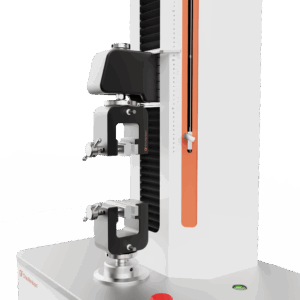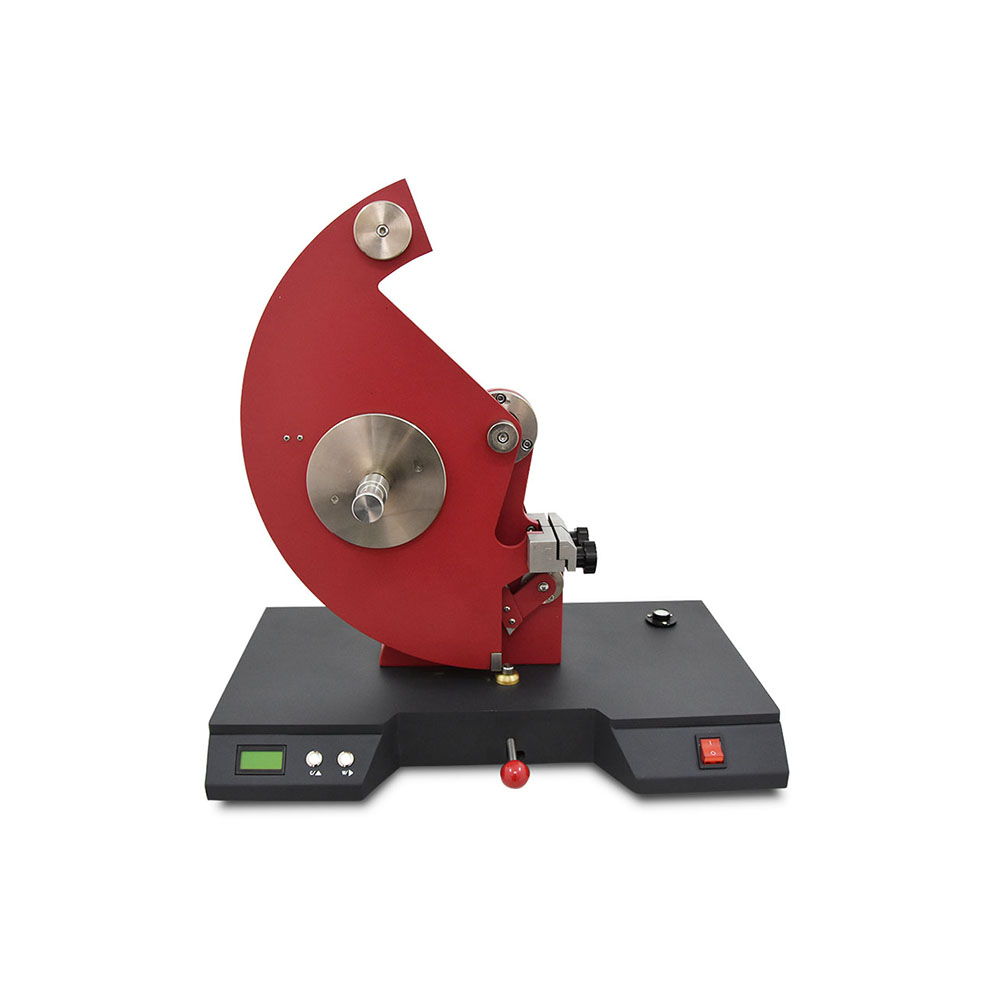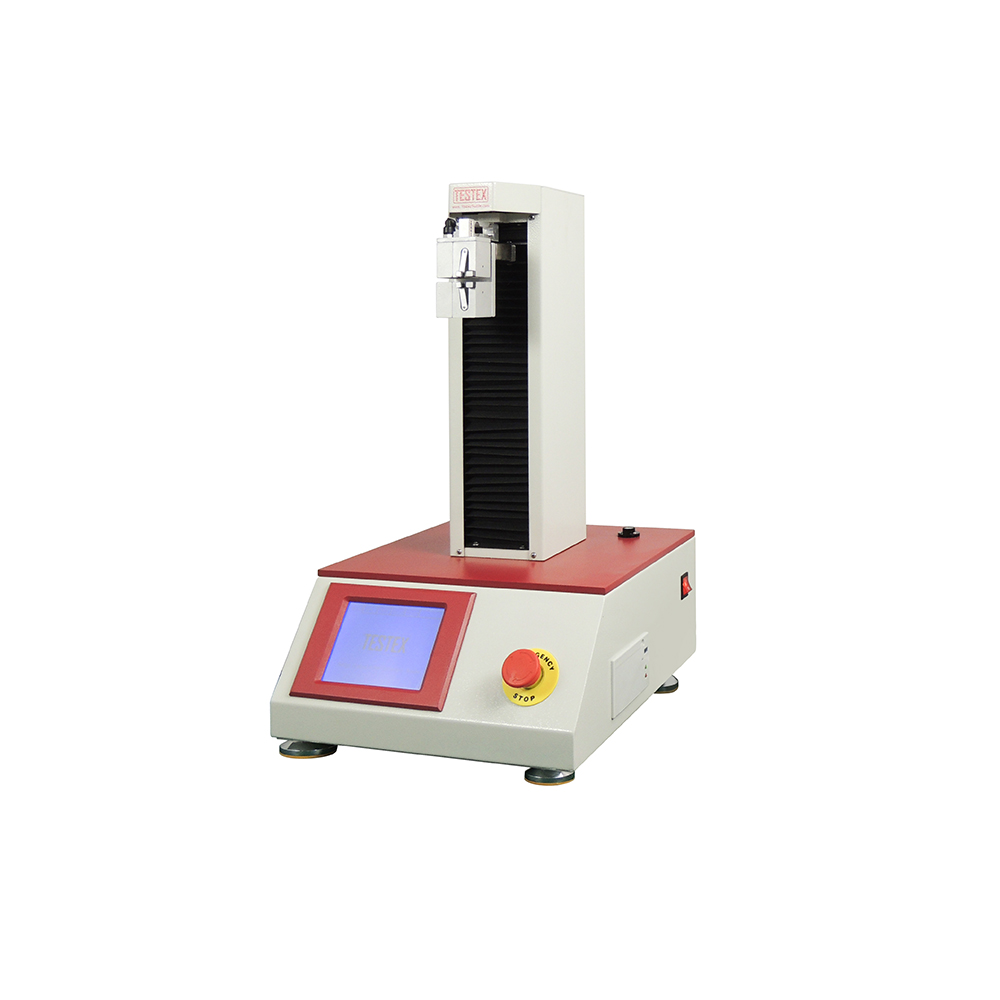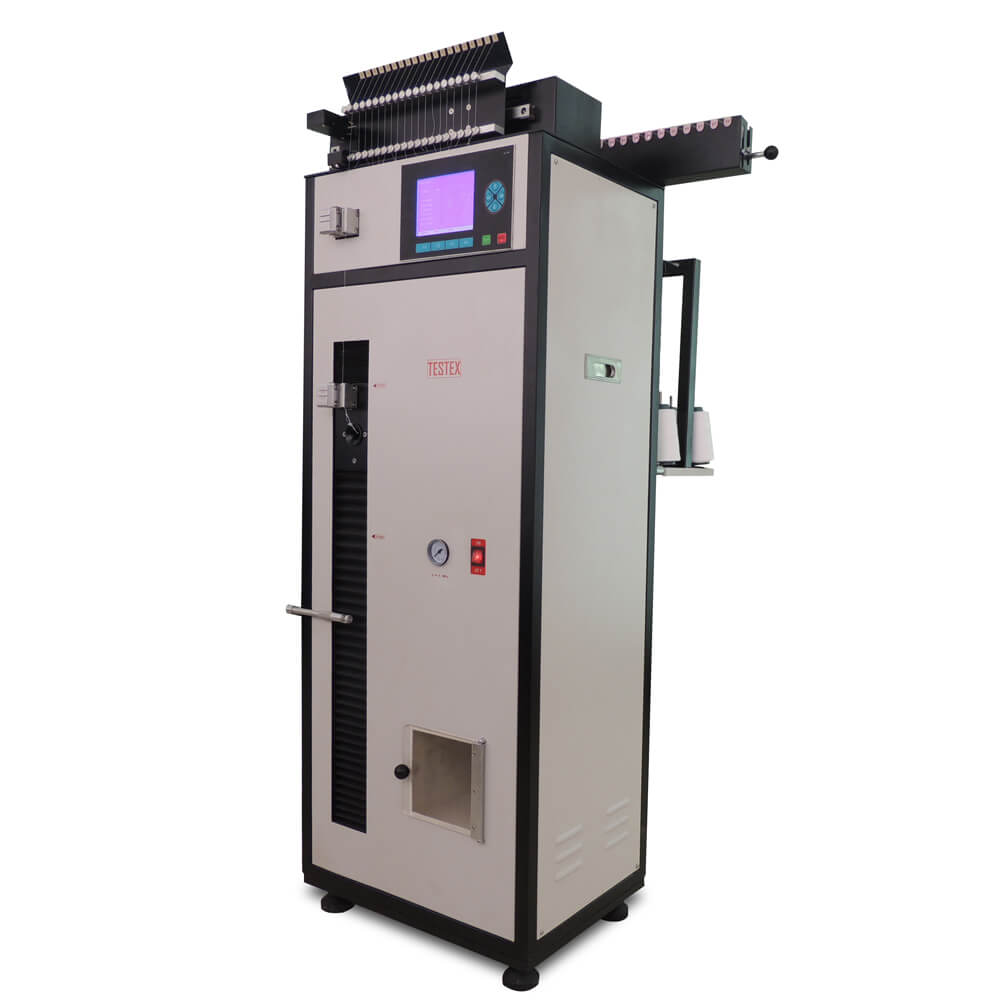
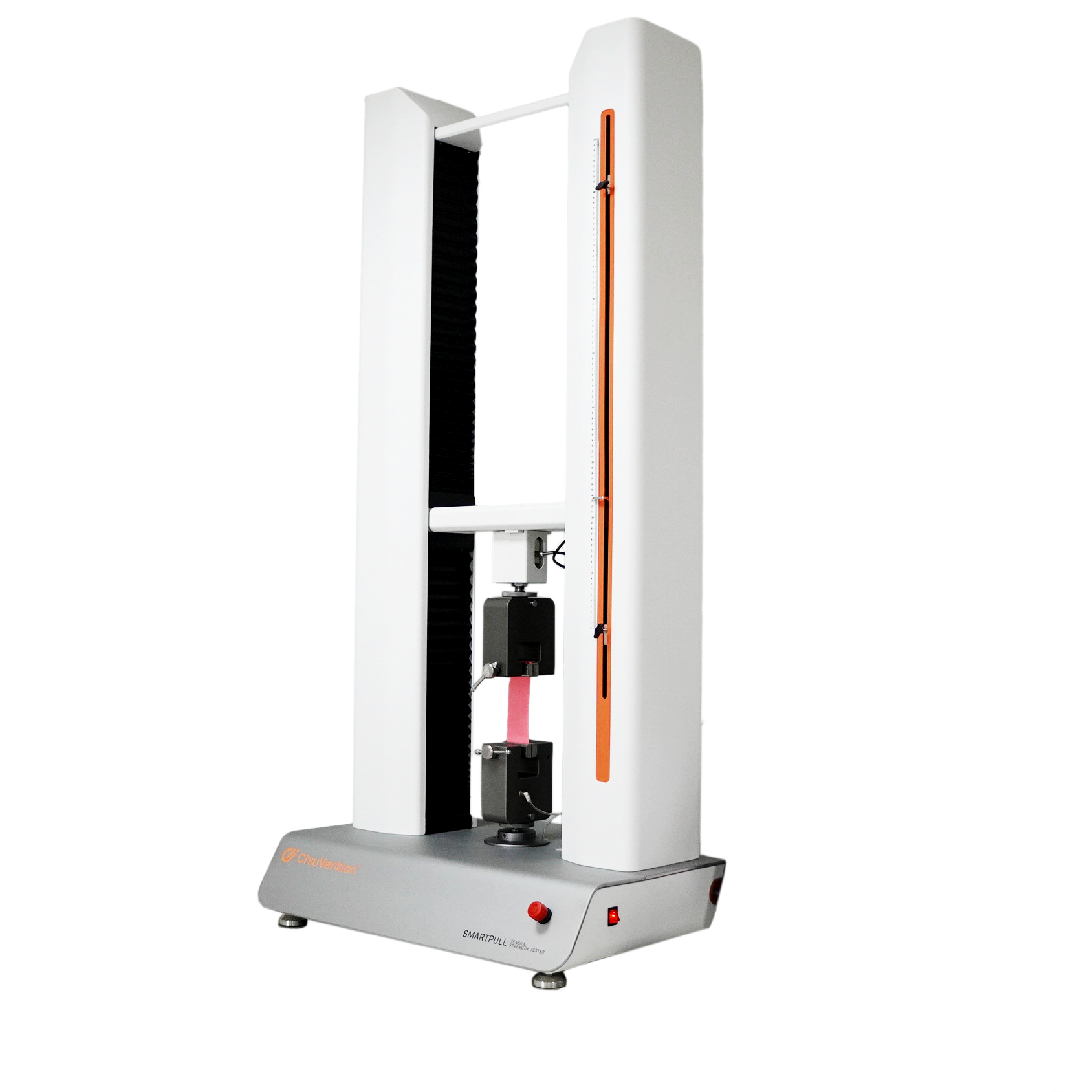
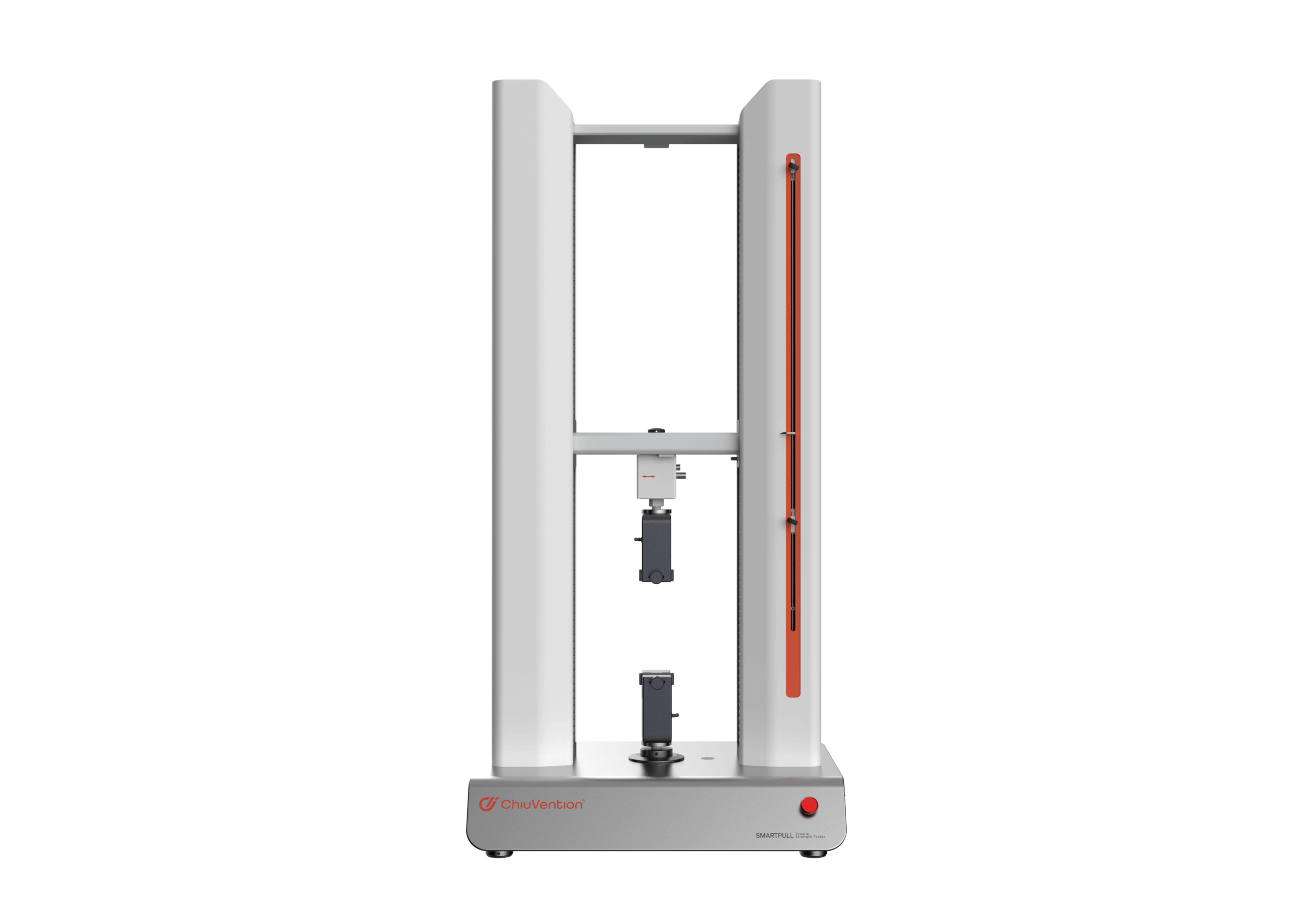
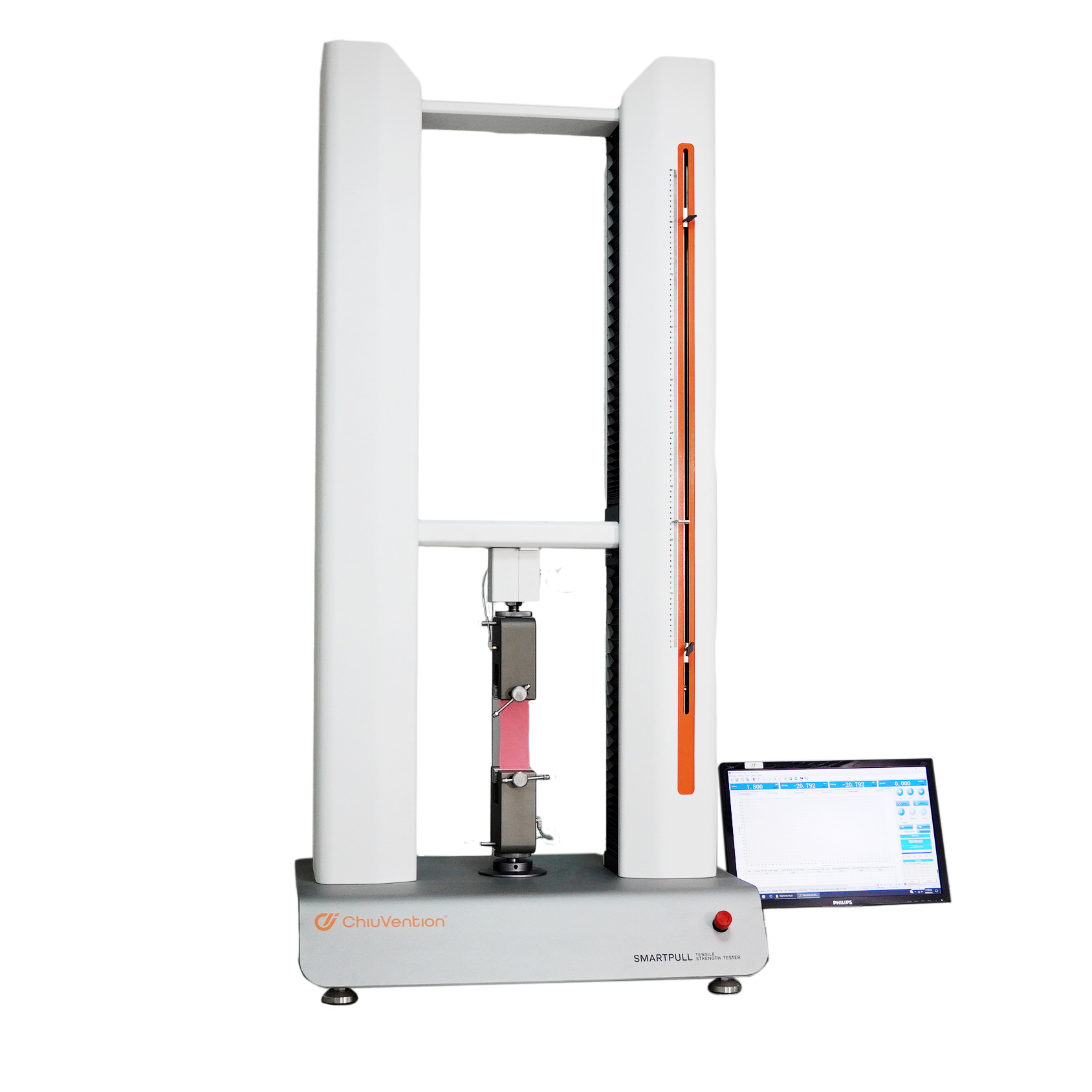
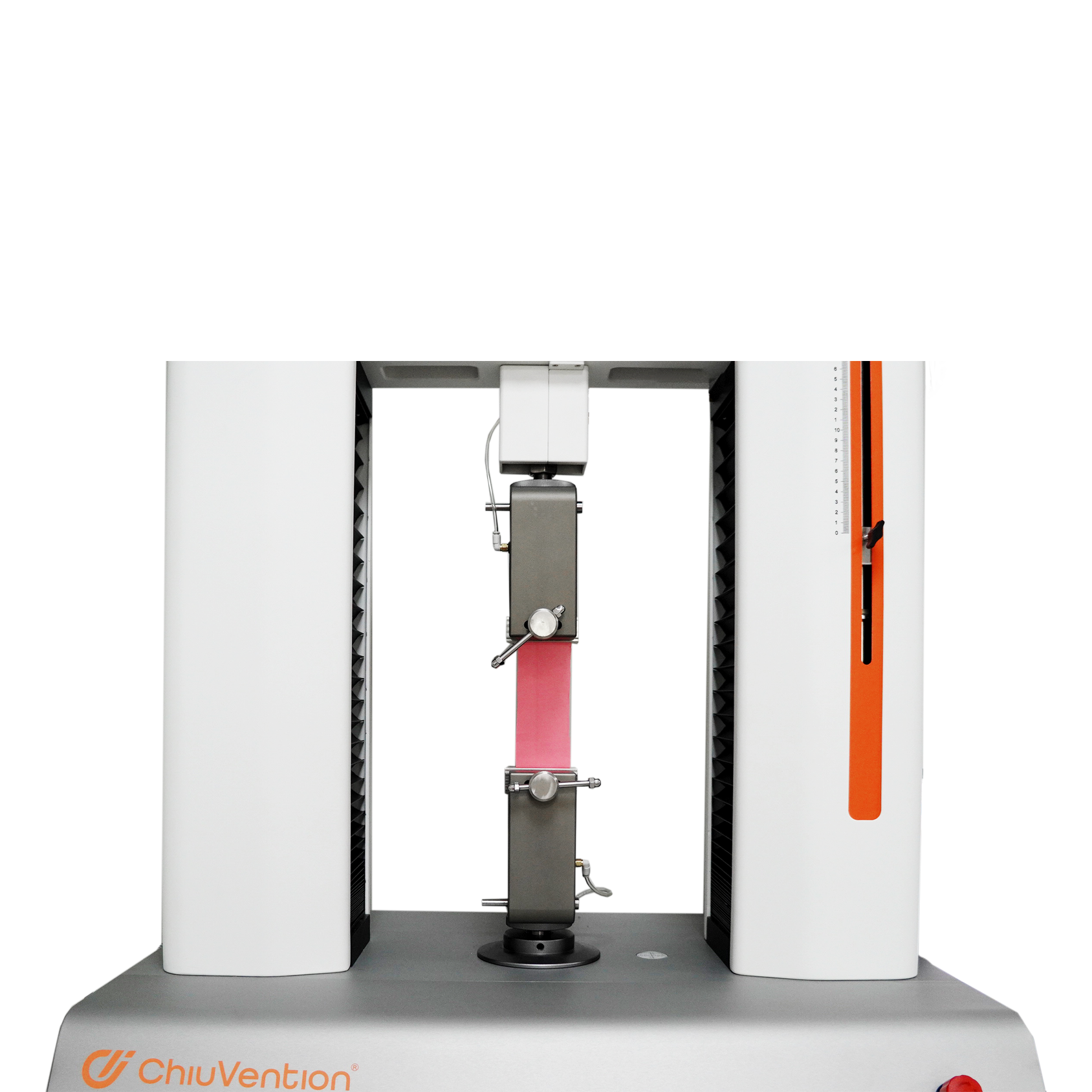
Fabric tensile strength tester, or fabric tensile strength machine, also named tensile strength testing machine is designed to test a wide range of materials, including fabric, leather, plastic, paper, etc, in tension, compression, flexure, bursting, shear, tear, elongation, constant load, elastic, thread slip, peeling and other mechanical properties. Fabric Tensile Strength Tester complies with ISO 13934.1/2, ISO 13935.1/2, ISO 9073.3/4, etc. And our fabric measuring machine is for sale.
Description
The Fabric tensile tester machine, a newly developed version named SmartPull Tensile Tester Machine, is AC servo-driven. It has ball screws to give stable pulling force and achieve high testing accuracy. The pull tester machine’s software is powerful and compatible. It outputs comprehensive test indexes, like displacement, maximum force, elongation, and stress. The tensile tester machine also has various safety features. They protect the instrument and guarantee the operator’s safety. It is a tensile machine made for textiles, leather, and footwear. It can do tension, compression, bending, tearing, shearing, peeling, and top-breaking tests. It applies to many international standards. These include ISO 9073-3, ISO13934-1/2, ASTM D5034, ASTM D5035, ISO 3377-2, ISO 13937-3, FZ/T 01030, and GB/T 19976.
TESTEX also provides single-column tensile testers.
The Features of Fabric Tensile Tester
Higher testing accuracy
An AC servo drive and ball screw create a stable pulling force. The force is constant and accurate to within 1%. This accuracy ensures the reliability and repeatability of the tensile test results.
Powerful software
The test software works for many languages. It can show the displacement, greatest force, and elongation. It also shows the greatest and bending stress, speed, and other test results. That is, it gets more comprehensive tensile test indexes.
Safety guarantee for the entire testing process.
This universal fabric tensile tester machine has an intelligent and active alarm system. It detects excessive displacement and torque and has overload and emergency stop devices. It also has up-and-down travel limits. The SmartPull Tensile Strength Testing Machine always keeps the testing process safe and stable.
It can be customized to meet diverse needs.
S-type load cell for pulling force of 5KN-10KN can be customized to realize more testing functions and the testing software can also be customized to realize automatic repeated testing.
Lightweight design
The SmartPull fabric tensile tester machine is 100 kg lighter than the first generation. This makes it easier to use.
The Specifications of SmartPull Tensile Testing Machine
| Test capacity | 1000 kg |
| Max Travel | 900mm (without fixture) |
| Travel accuracy | ≤1% |
| Travel speed | 1mm/min ~500mm/min |
| Speed accuracy | ≤1% |
| Test force range | 0.5% ~ 100%FS |
| Test force value accuracy | ±1% |
| Range of constant rate control | 0.5%~100FS |
Software configuration (standard)
A version of the test system, with a single-step test
Software configuration (optional)
The C version of the test system can achieve a multi-step test
Fixture and standards
Version A :
ISO 9073-3, ISO 13934-1, ISO 13934-2, ASTM D5034,
ASTM D5035, GB/T 3923.1, GB/T 3923.2
GB/T 13773.1, GB/T 13773.2, GB/T 24218.3
(The standards above are matched with clamps by 25×25 mm, 25×50 mm,
25×75 mm)
Optional Fixture and standards
Clamps by 25×100 mm: ISO 9073-4 GB/T 3917.3
Clamps by 50×75 mm : ASTM D5587
Leather tearing fixture: ISO 3377-2
Top breaking fixture: ASTM D6797 FZ/T 01030 GB/T 19976
Yarn fixture: ISO 2062
Version A+: ISO 13937-2 (Sample 50 mm wide)ISO 13937-3
GB/T 3917.2 (Sample 50 mm wide) GB/T 3917.5
Clams by 25×200 mm: ISO 13937-4 ISO 4674-1 GB/T 3917.4
Version C: ISO 13936-2, ASTM D4964 (U type fixture)
VersionC+: ASTM D434 ASTM D1683 ISO 13936-1
ISO 20932-1( with linear clamps, or choose other fixtures and replace the
clamps)
(The standards above should be programmed according to the test requirements provided by customers.)
Computer Configuration of Tensile Strength Equipment
CPU for the Intel Celeron (Celeron) 2 GHz or more CPU, Memory at least 512 MB, more than 1 GB is better.
Hard disk space of more than 2 GB, Display resolution of 1024 × 768 or more.
Printer is compatible with the operating system, if it’s required.
This is the operating system for Microsoft’s Windows. It includes XP, 7, 8, and 10.
You need to output the report in Word and Excel. So, you should install Microsoft’s Office 2003, 2007, or 2010.
How does a single-column tensile machine differ from a double-column one?
1. Difference One: Appearance Structure
One is a single column. The other is double-column (also called the door type). Double-column is heavier.
2. Difference two: The Test Force Range
The single-column tensile machine uses a single screw. The double-column tensile machine has double screws. It also has a longer beam than the single-column machine. So, the test force is much larger. The usual tensile testing machine has two columns. It can handle over 5KN for the test. It is mainly for tests of 1 ton or more. Single-column tensile testers do small force tests, generally below 5KN or 0.5 tons.
3. Difference three: the specimen’s requirements
The machine has one column. It has a small activity space and tests a limited range of forces. It also has strict specimen size requirements. In contrast, the double-column tensile tester has a bigger space. So, it can handle a wider range of specimen requirements.
4. Difference four: whether the need to fix the machine
The double-column pull tester has a big space and test force. Its platform is very large. To ensure accurate tests, it needs a fixed foundation. The lightweight single-column pull tester does not require fixing.
5. Difference five: product cost
The double-column machine costs more. So, its price is much higher than the single-column machine. But they each have their advantages.
In general, single-column and double-column strength machines differ in:
The maximum load, test width, and stretching space.
Also, in speed and speed accuracy.
But, their standards and configurations are similar. Buyers need to consider that, due to different materials, the test tension will vary. For example, textile enterprises generally choose a single-column tension machine. Rubber enterprises can choose a single-column or double-column tension machine. Some metal enterprises need larger force values. For them, only a double-column tension machine will do. For details, you can consult TESTEX professional consultants.