What are you looking for?
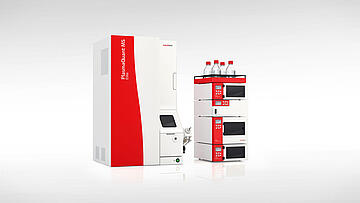
LC-ICP-MS is versatile, robust and highly sensitive method for the determination of element species in various sample matrices. The coupling of the PlasmaQuant MS with PQ LC offers outstanding precision and accuracy in elemental speciation. The combination of excellent chromatography and the high sensitivity of PlasmaQuant MS enables lowest detection limits for e.g., arsenic or chromium species.


Element Speciation Using LC-ICP-MS
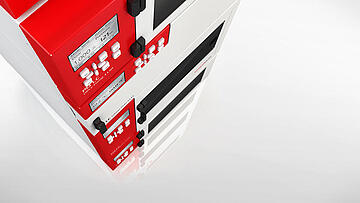
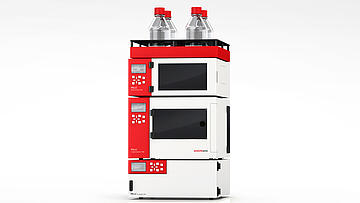
PQ LC is a basic chromatography system that is intended for hyphenation with ICP-MS enabling HPLC-ICP-MS and IC-ICP-MS. It can be upgraded for specific needs and applications, e.g., with a column oven or an UV/Vis detector. An ion chromatography module completes the portfolio enabling stand-alone IC applications, which require suppression of background conductivity for conductivity detection.
- Trace level determination of elemental species thanks to outstanding sensitivity and a wide linear operation range of the PlasmaQuant MS
- Simple handling and smooth workflows thanks to intuitive handling, fast change of applications, interactive and user-friendly software interface, as well as automatic safety check
- Flexible configuration and individual adaptation to your needs thanks to various upgrade modules
Element Speciation Using LC-ICP-MS
PQ LC is a basic chromatography system that is intended for hyphenation with ICP-MS enabling HPLC-ICP-MS and IC-ICP-MS. It can be upgraded for specific needs and applications, e.g., with a column oven or an UV/Vis detector. An ion chromatography module completes the portfolio enabling stand-alone IC applications, which require suppression of background conductivity for conductivity detection.
- Trace level determination of elemental species thanks to outstanding sensitivity and a wide linear operation range of the PlasmaQuant MS
- Simple handling and smooth workflows thanks to intuitive handling, fast change of applications, interactive and user-friendly software interface, as well as automatic safety check
- Flexible configuration and individual adaptation to your needs thanks to various upgrade modules
Element Speciation Using LC-ICP-MS
PQ LC is a basic chromatography system that is intended for hyphenation with ICP-MS enabling HPLC-ICP-MS and IC-ICP-MS. It can be upgraded for specific needs and applications, e.g., with a column oven or an UV/Vis detector. An ion chromatography module completes the portfolio enabling stand-alone IC applications, which require suppression of background conductivity for conductivity detection.
- Trace level determination of elemental species thanks to outstanding sensitivity and a wide linear operation range of the PlasmaQuant MS
- Simple handling and smooth workflows thanks to intuitive handling, fast change of applications, interactive and user-friendly software interface, as well as automatic safety check
- Flexible configuration and individual adaptation to your needs thanks to various upgrade modules
PQ LC is a basic chromatography system that is intended for hyphenation with ICP-MS enabling HPLC-ICP-MS and IC-ICP-MS. It can be upgraded for specific needs and applications, e.g., with a column oven or an UV/Vis detector. An ion chromatography module completes the portfolio enabling stand-alone IC applications, which require suppression of background conductivity for conductivity detection.

PQ LC Series for Hyphenation with PlasmaQuant MS
The combination of PQ LC and PlasmaQuant MS (LC-ICP-MS) offers a versatile, robust, and highly sensitive solution for the determination of element species in various kinds of samples. The species or chemical forms in which the element is present can have different mobility, bioavailability, and toxicity. This is why a careful characterization of environmental, food, and agricultural samples as well as consumer goods is required. Liquid chromatography allows for separation of elemental species, and the detection by inductively coupled plasma-mass spectrometry (ICP-MS) enables highly sensitive determination. Hence, LC-ICP-MS is an essential tool for assessing benefits and/or risk of elements present in the sample.
Environmental – Elemental speciation plays an important role with respect to evaluating chemistry of an element as well as its bioavailability and toxicity towards organisms or their chemical and physical effects on natural cycles. Elements of interest in species identification are e.g., arsenic, chromium, mercury.
Food and Agriculture – The quantification of major and trace elements, and of essential, nutritional, and potentially toxic elements is a common application in ICP-MS. Since an element can be essential or toxic just based on the oxidation state or compound in which it occurs, the determination of elemental species in foods and beverages is crucial for ensuring their safety. LC-ICP-MS enables the determination of elemental species, e.g analyzing arsenic species in juice or mercury species in seafood.
Pharma – Regulations and standards describe quality control procedures to ensure the efficiency and harmlessness of pharmaceutical products. During production, pharmaceutical products might be contaminated with e.g., chromium. Therefore, the potential toxicity must be evaluated by determining the concentration of Cr(VI) according to defined standards.
PQ LC Series for Hyphenation with PlasmaQuant MS
The combination of PQ LC and PlasmaQuant MS (LC-ICP-MS) offers a versatile, robust, and highly sensitive solution for the determination of element species in various kinds of samples. The species or chemical forms in which the element is present can have different mobility, bioavailability, and toxicity. This is why a careful characterization of environmental, food, and agricultural samples as well as consumer goods is required. Liquid chromatography allows for separation of elemental species, and the detection by inductively coupled plasma-mass spectrometry (ICP-MS) enables highly sensitive determination. Hence, LC-ICP-MS is an essential tool for assessing benefits and/or risk of elements present in the sample.
Environmental – Elemental speciation plays an important role with respect to evaluating chemistry of an element as well as its bioavailability and toxicity towards organisms or their chemical and physical effects on natural cycles. Elements of interest in species identification are e.g., arsenic, chromium, mercury.
Food and Agriculture – The quantification of major and trace elements, and of essential, nutritional, and potentially toxic elements is a common application in ICP-MS. Since an element can be essential or toxic just based on the oxidation state or compound in which it occurs, the determination of elemental species in foods and beverages is crucial for ensuring their safety. LC-ICP-MS enables the determination of elemental species, e.g analyzing arsenic species in juice or mercury species in seafood.
Pharma – Regulations and standards describe quality control procedures to ensure the efficiency and harmlessness of pharmaceutical products. During production, pharmaceutical products might be contaminated with e.g., chromium. Therefore, the potential toxicity must be evaluated by determining the concentration of Cr(VI) according to defined standards.
PQ LC Series for Hyphenation with PlasmaQuant MS
The combination of PQ LC and PlasmaQuant MS (LC-ICP-MS) offers a versatile, robust, and highly sensitive solution for the determination of element species in various kinds of samples. The species or chemical forms in which the element is present can have different mobility, bioavailability, and toxicity. This is why a careful characterization of environmental, food, and agricultural samples as well as consumer goods is required. Liquid chromatography allows for separation of elemental species, and the detection by inductively coupled plasma-mass spectrometry (ICP-MS) enables highly sensitive determination. Hence, LC-ICP-MS is an essential tool for assessing benefits and/or risk of elements present in the sample.
Environmental – Elemental speciation plays an important role with respect to evaluating chemistry of an element as well as its bioavailability and toxicity towards organisms or their chemical and physical effects on natural cycles. Elements of interest in species identification are e.g., arsenic, chromium, mercury.
Food and Agriculture – The quantification of major and trace elements, and of essential, nutritional, and potentially toxic elements is a common application in ICP-MS. Since an element can be essential or toxic just based on the oxidation state or compound in which it occurs, the determination of elemental species in foods and beverages is crucial for ensuring their safety. LC-ICP-MS enables the determination of elemental species, e.g analyzing arsenic species in juice or mercury species in seafood.
Pharma – Regulations and standards describe quality control procedures to ensure the efficiency and harmlessness of pharmaceutical products. During production, pharmaceutical products might be contaminated with e.g., chromium. Therefore, the potential toxicity must be evaluated by determining the concentration of Cr(VI) according to defined standards.
PQ LC Series for Hyphenation with PlasmaQuant MS
The combination of PQ LC and PlasmaQuant MS (LC-ICP-MS) offers a versatile, robust, and highly sensitive solution for the determination of element species in various kinds of samples. The species or chemical forms in which the element is present can have different mobility, bioavailability, and toxicity. This is why a careful characterization of environmental, food, and agricultural samples as well as consumer goods is required. Liquid chromatography allows for separation of elemental species, and the detection by inductively coupled plasma-mass spectrometry (ICP-MS) enables highly sensitive determination. Hence, LC-ICP-MS is an essential tool for assessing benefits and/or risk of elements present in the sample.
Environmental – Elemental speciation plays an important role with respect to evaluating chemistry of an element as well as its bioavailability and toxicity towards organisms or their chemical and physical effects on natural cycles. Elements of interest in species identification are e.g., arsenic, chromium, mercury.
Food and Agriculture – The quantification of major and trace elements, and of essential, nutritional, and potentially toxic elements is a common application in ICP-MS. Since an element can be essential or toxic just based on the oxidation state or compound in which it occurs, the determination of elemental species in foods and beverages is crucial for ensuring their safety. LC-ICP-MS enables the determination of elemental species, e.g analyzing arsenic species in juice or mercury species in seafood.
Pharma – Regulations and standards describe quality control procedures to ensure the efficiency and harmlessness of pharmaceutical products. During production, pharmaceutical products might be contaminated with e.g., chromium. Therefore, the potential toxicity must be evaluated by determining the concentration of Cr(VI) according to defined standards.

PQ LC – HPLC System, non metal, PEEK
Metalfree LC system with PEEK, for low backgrounds on target isotopes in speciationanalysis
Order number: 810-88409-0
PQ LC – HPLC System, non metal, PEEK
Metalfree LC system with PEEK, for low backgrounds on target isotopes in speciationanalysis
Order number: 810-88409-0
PQ LC – HPLC System, stainless steel
Fully equipped LC system, with various upgrade options, such as temperature control for the sample injector, column oven or UV/Vis detector
Order number: 810-88403-0
PQ LC – HPLC System, stainless steel
Fully equipped LC system, with various upgrade options, such as temperature control for the sample injector, column oven or UV/Vis detector
Order number: 810-88403-0
Technical Data
|
Dimension (width x depth x height) |
|
|---|---|
|
PQ LC – HPLC System, non metal, PEEK |
396 mm x 478 mm x 165 mm |
|
PQ LC – HPLC System, stainless steel |
396 mm x 478 mm x 165 mm |
Order Information
|
Order number |
Description |
|---|---|
| 810-88409-0 | PQ LC PQ LC – HPLC System, non metal, PEEK |
| 810-88403-0 | PQ LC – PQ LC – HPLC System, stainless steel |
Dimension (width x depth x height)
PQ LC – HPLC System, non metal, PEEK
810-88409-0
PQ LC – HPLC System, stainless steel
810-88403-0
Order number
Description
The LC system and its components are controlled by the Clarity Chromatography Software (DataApex). This software also interfaces with the ASpect MS device software of PlasmaQuant MS. Once the ICP-MS is initiated, Clarity takes over complete control and data processing. Regular status updates ensure seamless communication and shutdown of all components in the event of system malfunctions. The Clarity software package also supports LC systems from other manufacturers, providing high flexibility in application.
The Clarity Chromatography Software offers a variety of tools for configuring the chromatography system to meet the requirements of FDA 21 CFR Part 11, including:
Newsletter Stay up to date
Social Media
Follow us on the social web.
Cookie settings
Check and adjust your cookie settings here.
Sitemap
This website uses cookies
Consent Management
We respect your right to privacy. You can decide for yourself which types of cookies you want to accept when visiting the website and which not.