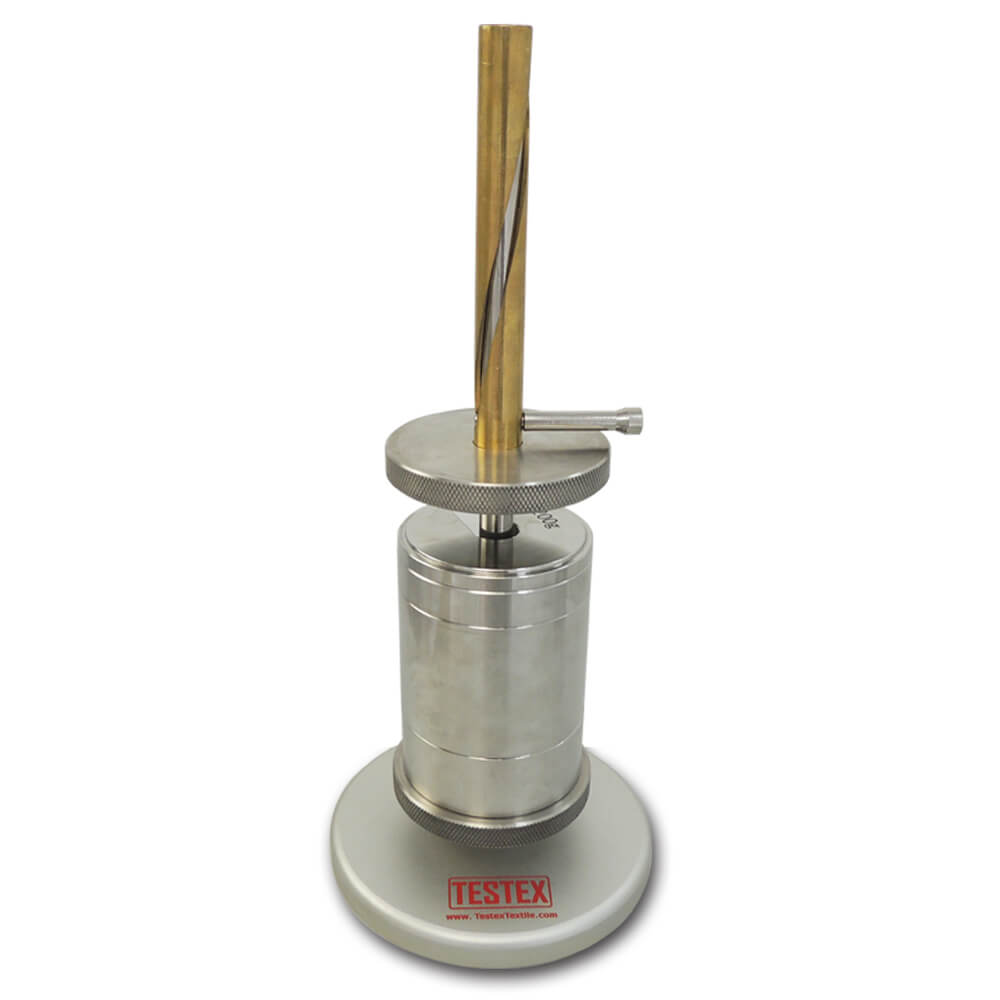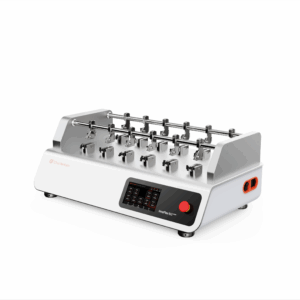
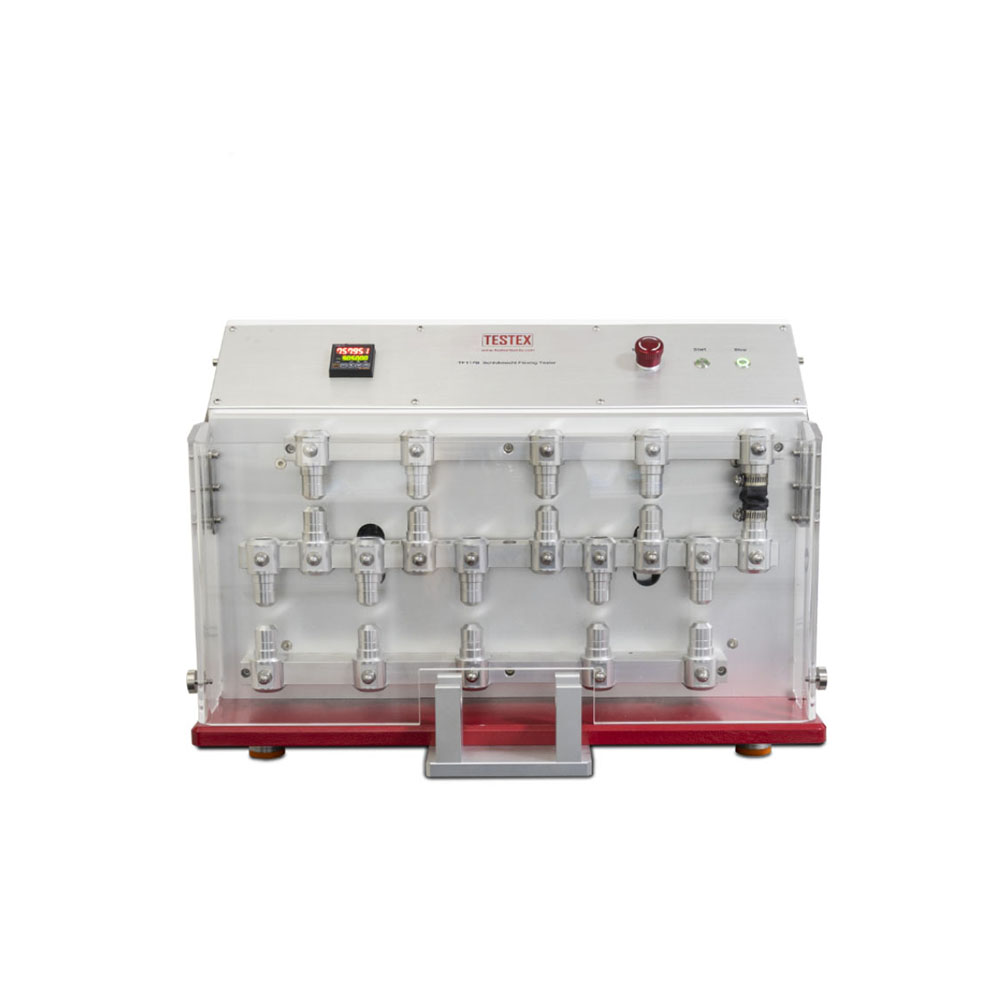
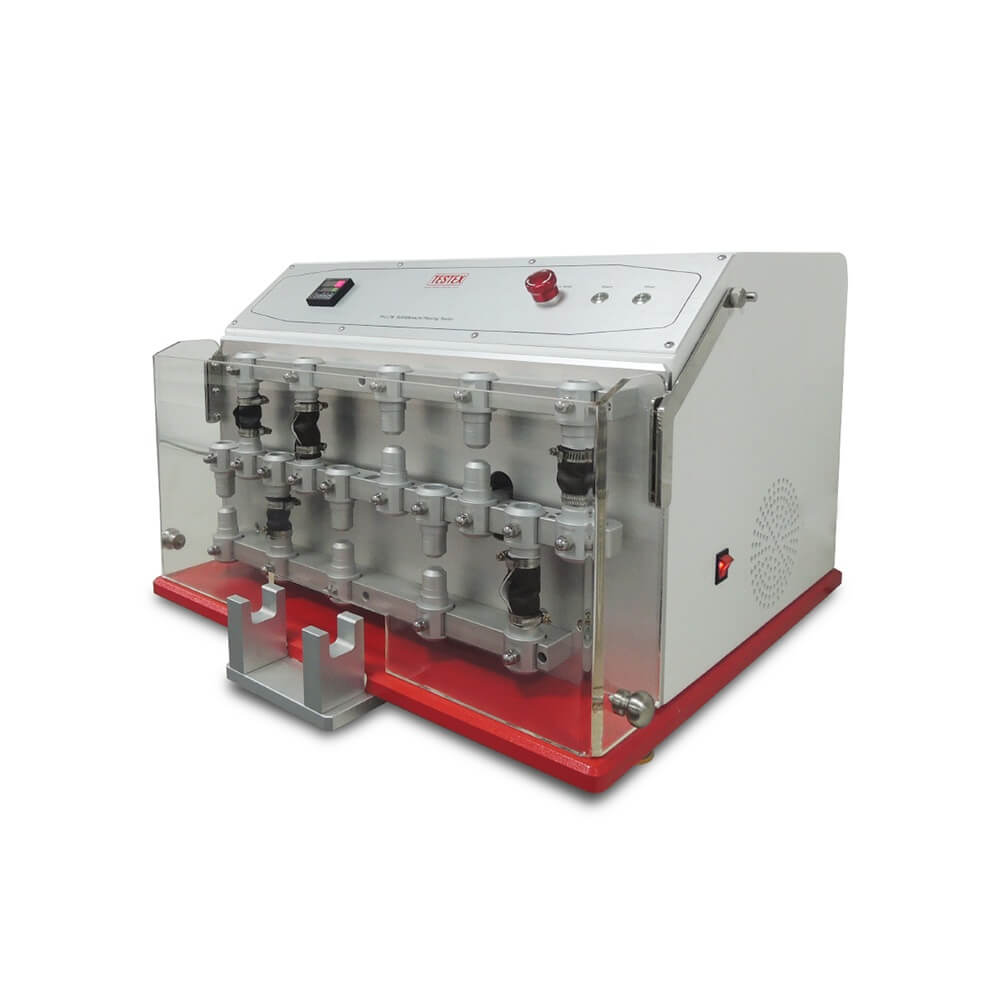
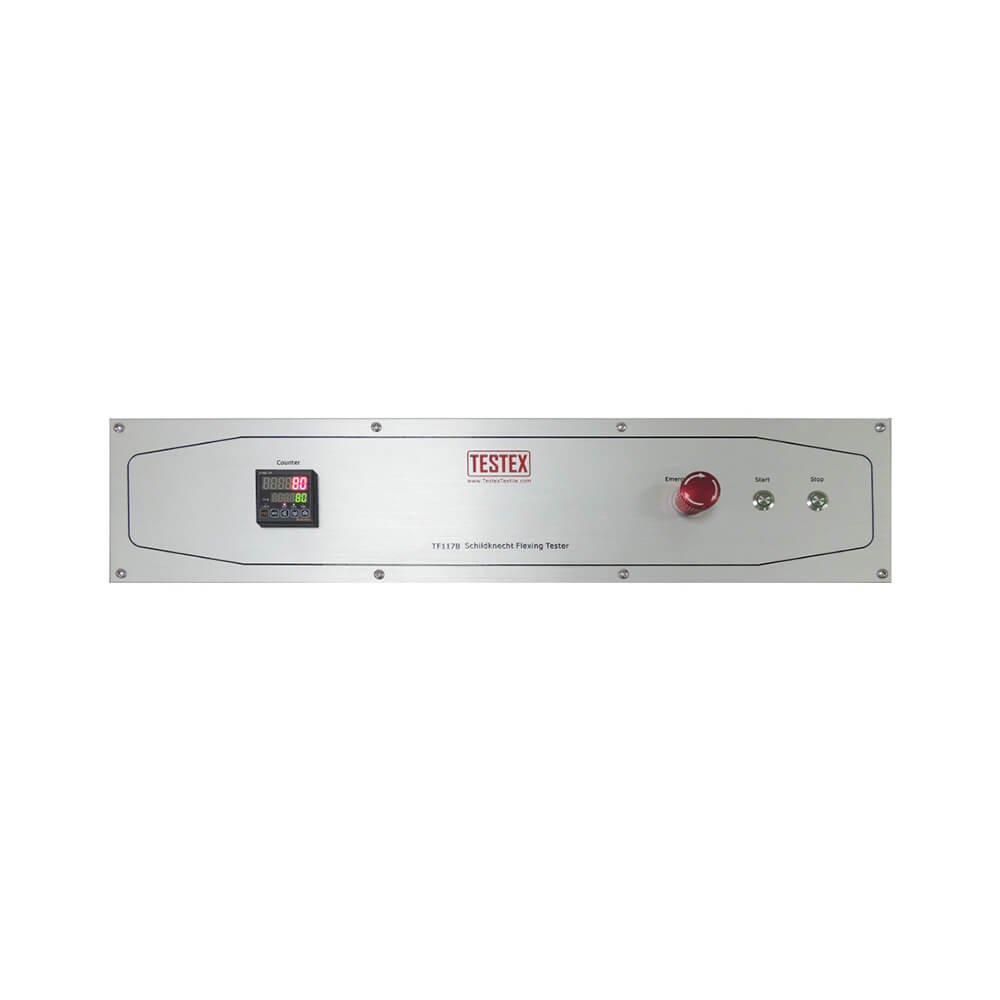
Schildknecht Flexing Tester is designed to determine the resistance of coated fabrics to damage by flexing due to oscillation at 500 times per minute. Accommodates 10 specimens, provided with a resettable electronic counter to record number of cycles.
For testing the Compression-folding (Schildknecht) flex cracking resistance of medical protective clothing, if passed, a further test will go with TF163C Hydrostatic Head Tester, to pass the water penetration under pressure test.
Description
Parameter
| Work Stations: 10 |
| Stroke Length: 11.7 ± 0.35 mm |
| Cylinder External Dia: 25.4 ± 0.1 mm |
| Tool Clips: 10 ± 1 mm wide |
| Counter: 1 ~ 999,999 |
Specification
| Model | TF117B |
| Standards | EN14325, EN ISO 7854 Method B, ISO 7854 Method B, GB/T 12586 Method B |
| Power | 220 V, 50 Hz |
| Weight | 150 Kg |
| Dimensions | 360 mm x 490 mm x 280 mm |
TESTEX – a professional textile testing instrument supplier – Schildknecht Flexing Tester is on sale, contact us to get a detailed price quote.
What is Schildknecht flexing tester?
Schildknecht Flexing Tester is designed to determine the resistance of coated fabrics to damage by flexing due to oscillation at 500 times per minute. Accommodates 10 specimens, provided with a resettable electronic counter to record number of cycles.
For testing the Compression-folding (Schildknecht) flex cracking resistance of medical protective clothing, if passed, a further test will go with TF163C Hydrostatic Head Tester, to pass the water penetration under the pressure test. In addition, TESTEX also offers the flexing machine for method A – Demattia flexing method and method C – Crumple/flex method.
How does the Schildknecht flexing tester work?
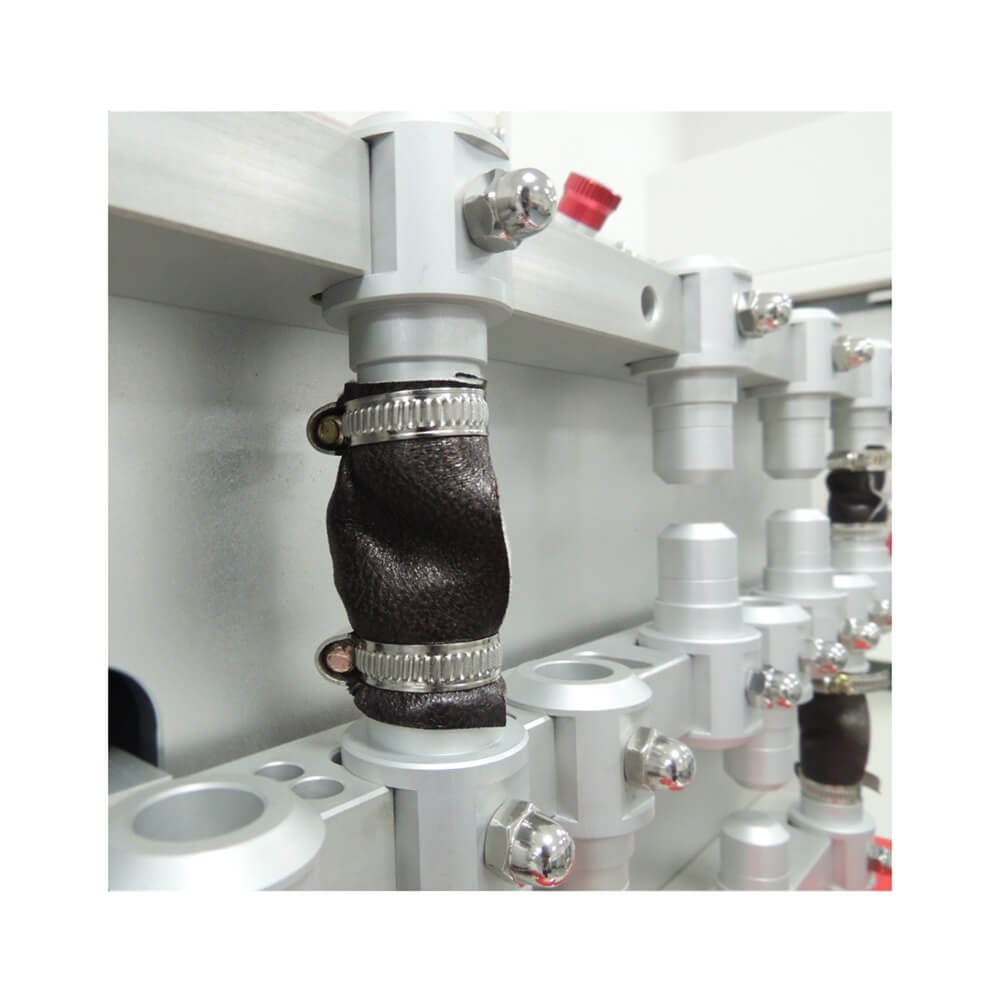
This test method describes Schildknecht flexing of assessing the resistance of coated fabrics to damage by repeated flexing. Mount a rectangular strip of coated fabric on two opposing cylinders so that the test piece takes a cylindrical shape. One of the cylinders makes a reciprocating movement along its axis, causing the coated fabric to be alternately compressed and relaxed. After certain cycles, the specimen is flexing. This flexing test of the coated fabric reaches a pre-determined number of cycles or until the specimen appears broken.
Test procedure
Cut six specimens (105mm*50mm) from the coated fabric according to ISO 1420, and condition the specimens according to ISO 2231.
Fix the specimen on the apparatus, and start the apparatus. After a specified number of cycles, or after a break in the coated fabric, stop the instrument and examine the specimen.
Analysis of flexing damage
Assess the overall appearance, taking into account all visible factors such as wrinkling, cracking, flaking, and discoloration. Compare the flexed test pieces with the unflexed material and grade the flexed material according to the following four scoring levels. For the unbent material, observe the damage to the appearance of the specimen directly with the naked eye.
- 0 None
- 1 Slight
- 2 Moderate
- 3 Severe
Also, if there is flexing damage (cracking and delamination, etc.), please indicate the type and extent of the damage.